

If I am being honest, staying organized is how I function.

I thrive on systems. I love structure. Clear plans, defined processes, and knowing where things belong are what help my brain feel safe and steady.
But even as someone who genuinely loves organization, I have learned that not all systems are sustainable. Rigid does not always mean supportive. Perfect plans still fall apart when real life shows up.
Over time, I stopped chasing systems that looked impressive and started keeping the ones that actually worked on hard days. The tools I rely on now are structured, but forgiving. Organized, but flexible enough to bend when they need to.
These are the simple tools I keep coming back to.
What I Mean by “Tools”
When I talk about tools, I am not talking about complicated apps, color coded schedules, or routines that fall apart the second life gets messy.
I mean small, supportive things that help me:
- get thoughts out of my head
- reduce mental clutter
- stay oriented when life feels busy
The best tools do not demand constant maintenance. They work whether I have five minutes or fifty, and they do not punish me if I miss a day.
1. One Place Where Everything Goes
This is the backbone of my entire system.
I use ChatGPT as my main capture space. Where ideas land first. Thoughts, plans, half-formed questions, brain dumps, outlines, and lists. If it pops into my head, it goes here.
What makes this work is not the technology itself. It is the simplicity. I am not deciding where something belongs or how it should be labeled in the moment. I am just getting it out of my head.
That matters more than it sounds.
When ideas stay trapped in your brain, they create background noise. When they have a place to live, your brain can relax. I know I can always come back later and shape things when I have the energy.
Why This Works for a Busy Brain
Externalizing thoughts reduces cognitive load. Instead of holding everything in working memory, I am giving my brain permission to let go.
A conversational capture space also removes pressure. I am not staring at a blank list or forcing myself to be concise. I can think out loud, ramble, ask questions, and come back later to refine.
When This Breaks Down
For me, things break down when topics start bleeding into each other.
I actually thrive on separate threads for different areas of my life. A thread for this blog. A thread for Etsy. A thread for health. A thread for school. Keeping topics contained helps me stay focused, prevents mental cross-talk, and makes it much easier to track things down later.
If I try to force everything into one place, I feel more scattered, not less.
When things start to feel overwhelming, I do the opposite of consolidating. I separate. Clear boundaries between topics give me clearer thinking and faster retrieval when I need to reference something.
2. A Quiet Digital Task List
I do not use a traditional task manager.
I use ChatGPT.
Instead of managing tasks through rigid lists, I talk through what needs to be done, what feels heavy, and what is realistically possible. We break things down together, identify priorities, and build plans that fit the day I am actually having.
This feels less like being managed by a system and more like having support while I think.
Why This Works for Me
Task lists can become overwhelming when they grow faster than tasks get completed. Talking through priorities helps me see what truly matters and what can wait.
It also allows for flexibility. Some days I have deep focus. Other days I have small pockets of time. My task planning reflects that reality instead of fighting it.
When This Breaks Down
If I start revisiting the same tasks without progress, that is a signal to simplify. Either the task is too big, too vague, or not actually necessary.
3. A Dry Erase Board for Visual Clarity
In addition to digital tools, I rely heavily on visual reminders.
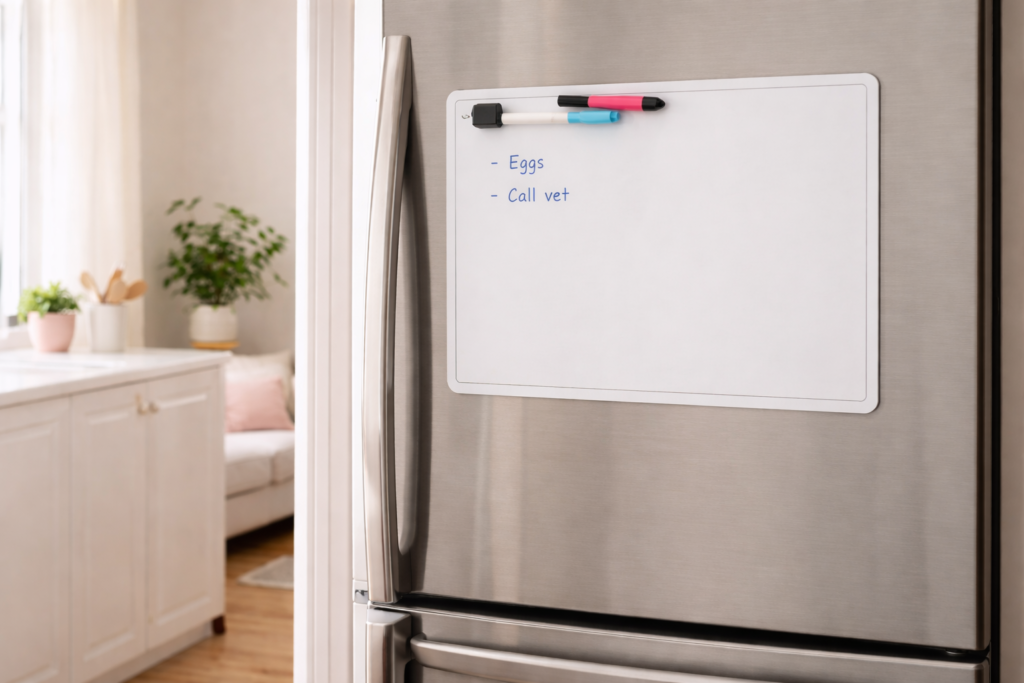
I use a simple dry erase board and dry erase calendar on the fridge. I’ll link a similar dry erase calendar here if you’re curious.
These hold the things I need to see, not just remember. Appointments, deadlines, weekly priorities, and anything that affects the flow of the household.
Because they are easy to update, they stay relevant. If plans change, I erase and move on instead of feeling behind.
Why This Works in Real Life
Visual cues reduce decision fatigue. I do not have to check an app or remember what is coming up. I see it every time I walk past the fridge.
Keeping these tools in a shared space also helps align everyone in the household. Information is visible, not locked away in my head.
When This Breaks Down
If the board becomes cluttered, it loses its effectiveness. When that happens, I erase everything and start fresh. Clarity always beats completeness.
4. A Workspace That Feels Supportive
This one took me longer to appreciate, but it makes a real difference.
When my workspace feels calm, my brain follows.

That does not mean minimalist perfection or aesthetic pressure. It means fewer distractions, comfortable lighting, and a few things I genuinely enjoy looking at.
A supportive workspace makes it easier to focus, especially when my attention is already divided.
Why Environment Matters
Your environment is part of your system. Visual clutter creates mental clutter. A calm space reduces friction before you even start working.
When This Breaks Down
If my workspace starts collecting everything, I know it is time to reset. Not a full overhaul. Just enough to restore clarity.
5. Prompts Instead of Pressure
On days when my brain feels full, I do not force myself to figure everything out from scratch.
I use prompts.
Simple questions like:
- What actually needs my attention today?
- What can wait?
- What would make today feel easier?
Prompts give my thoughts somewhere to start. They remove the pressure to have clarity instantly.
This is a big part of why Prompt + Prism exists.
How These Tools Work Together
In real life, these tools are not used in isolation.
A thought shows up. I capture it.
Later, I turn that thought into a task or a decision. I talk it through.
If it affects the household or my schedule, it goes on the board.
The goal is not productivity for its own sake. The goal is clarity.
A Gentle Reminder About Burnout
No tool will fix burnout by itself.

But the right tools can reduce friction. They can make your days feel lighter and help you move through responsibilities with less guilt.
If something stops serving you, you are allowed to let it go.
That is not failure. That is adjustment.
Frequently Asked Questions
Do I need all of these tools?
No. Start with one. Let it earn its place before adding anything else.
Is it okay to rely on AI for organization?
Yes. Tools exist to support thinking, not replace it. Used intentionally, AI can reduce mental load and increase clarity.
What if I fall off systems easily?
That does not mean you failed. It means the system needs to be simpler or more flexible.
Start Small
You do not need a brand new system.
You do not need to overhaul your life.
Choose one tool that makes things easier. Let it support you quietly in the background.
That is how organization becomes sustainable instead of exhausting.
Some links in this post may be affiliate links. This means I may earn a small commission at no extra cost to you. I only share tools I genuinely use and trust.
Leave a Reply